Schedule a talk with one of our advisors to learn more about Summitry and how we can help you get a foothold on your financial life. For career opportunities please visit careers at Summitry.


Midterm elections can mark an important reset for government policy and a clearing event for markets. Tuesday’s results could be a case in point. With Democrats taking control of both chambers of Congress and candidates supporting data center restrictions winning in key states, the implications for near-term economic activity, market sentiment, and stock market performance could be profound.
Data Centers and the AI Trade
One of the key issues on the ballot was the pace of AI infrastructure development, particularly data centers. The buildout was already facing equipment shortages and power constraints. With changes in Washington and several key states, the likelihood of additional federal and local obstacles appears to be rising. Data center construction depends heavily on local permitting, making state and local policy particularly important.
Georgia is a case in point, given its development pipeline and the incoming administration’s support for a moratorium. Similar dynamics are emerging in other key markets. More hearings, tighter permitting, and less generous tax treatment could slow construction and increase costs.
Typically, these policy changes would have limited market implications. But the scale of this investment cycle makes the stakes unusually high. With estimates of AI infrastructure investment exceeding $10 trillion through 2030, changes in data center policy could have significant consequences throughout the supply chain.
The stock market appears to have anticipated some of these risks. SOXX, a semiconductor ETF, has fallen 23% over the past month and is down another 3.14% on Wednesday, although the full impact may still not be reflected in prices.
The market’s exposure to AI extends well beyond semiconductor stocks. Utilities, industrial companies, and infrastructure developers increasingly depend on the same spending cycle. That creates a common risk across seemingly different investments.
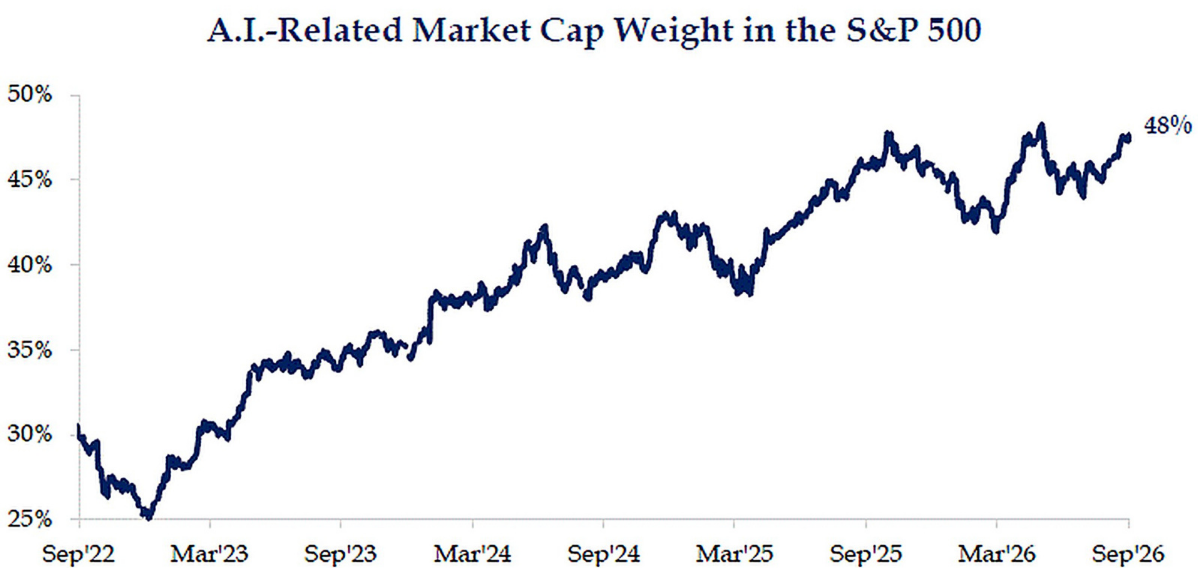
Source: Baird Strategas
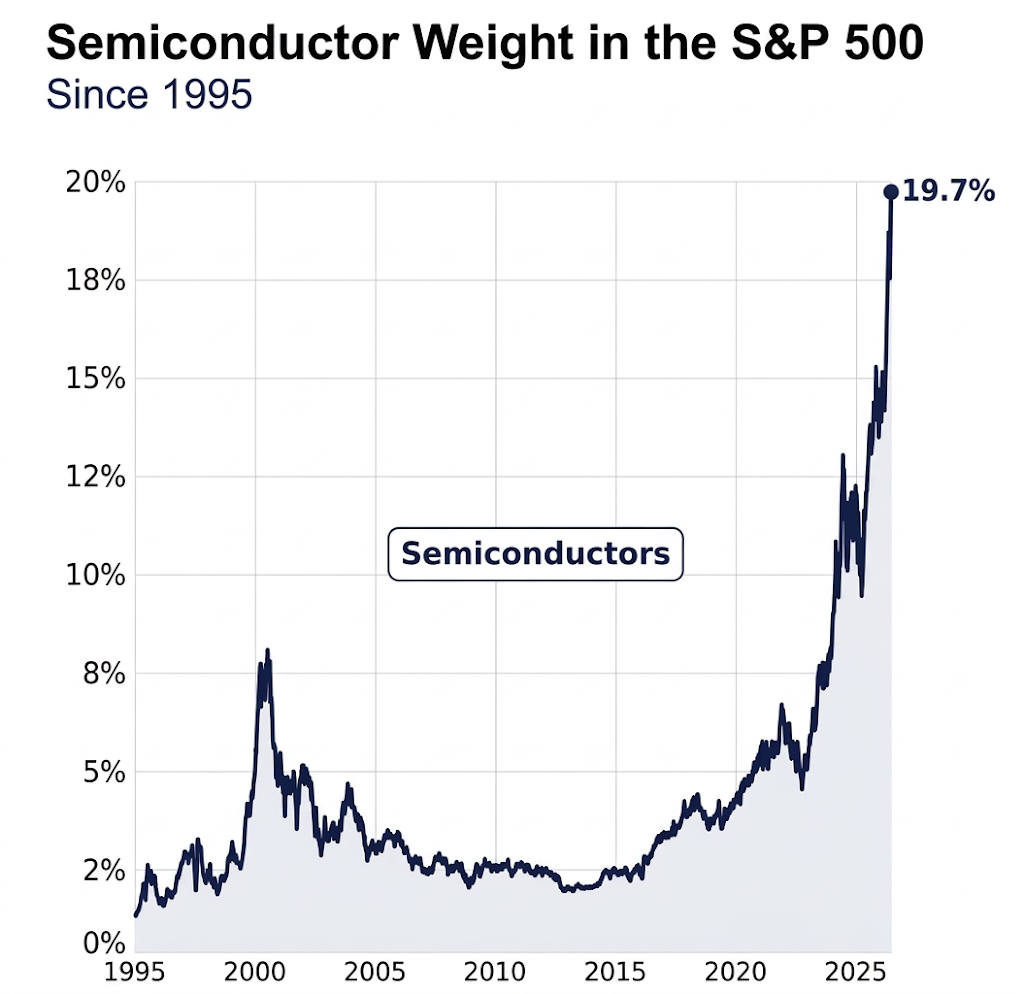
Source: Bloomberg, S&P Global as compiled by Citadel Securities
Slower data center construction could delay supplier revenue and challenge optimistic valuations. AI adoption and technological disruption, however, can continue even if the infrastructure arrives more slowly.
The Economy Has Been Riding on Business Investment
U.S. economic conditions remain uneven. Housing is in the doldrums, and lower-income consumers are struggling with rising prices. Business investment, meanwhile, has been a major source of strength, supported by reshoring and AI infrastructure spending.
Both trends have attracted support across party lines, although in different directions. Bringing jobs and manufacturing back to the United States remains politically popular, while concerns about electricity costs, resource use, and local development are creating bipartisan resistance to data centers.
If that resistance translates into tighter restrictions, one of the economy’s main growth drivers – data center construction – could lose momentum.
Hyperscalers Could Benefit
The large technology companies funding much of the AI buildout-Amazon, Alphabet, Meta, and Microsoft-could benefit from a more measured pace of construction in two ways.
First, slower development could increase the scarcity value of their existing compute capacity in a market already facing supply constraints.
Second, these companies are writing many of the checks that fund the buildout. That spending weighs on free cash flow and commits substantial capital today in anticipation of higher earnings in the future. A more measured buildout could improve near-term cash flow, reduce the risk of overbuilding, and narrow the gap between investment and returns.
The benefit is not guaranteed. Restrictions could also constrain growth or raise operating costs. The outcome will depend on whether the benefits of slower spending outweigh the revenue growth lost to slower capacity expansion.
Our Portfolio Is Built for More Than One Policy Outcome
The voters have spoken, and the shift in the political environment is clear. That shift can create market volatility, change investor sentiment, and affect near-term profits for some businesses. But for long-term investors, the key question is whether government policies alter a company’s competitive position and long-term earnings power.
At Summitry, we invest in competitively advantaged businesses that we believe can, over long enough periods, compound earnings across a range of economic and political environments. Our strategy does not depend on correctly predicting the next election or Washington’s next spending priority. Elections determine who holds office. The underlying long term future economics of our businesses and the price we pay for their stocks will determine our returns.
The views expressed are those of the Summitry investment team and are intended for informational purposes only. Any forward-looking statements are as of the publication date and may be modified due to changes in the market or economic conditions and may not necessarily come to pass. Investing in securities involves the risk of loss.
GET THE NEXT SUMMITRY POST IN YOUR INBOX: